Article
Can Nasal Polyps Come Back After Surgery?
Quick answer: Yes, nasal polyps can come back after surgery, because surgery removes the polyps but does not switch off the inflammation that causes them. Small polyps are seen again in about 40% of patients within 18 months, and most of them never need another operation (Hopkins, 2019). Asthma, aspirin sensitivity and previous sinus surgery make a return more likely. Daily saline rinses, a steroid spray or steroid rinse as your surgeon directs, and regular checkups keep most polyps under control, and biologic medicines or revision surgery help when they do not.
If you have had sinus surgery for nasal polyps, one of the first questions is whether they will grow back. The honest answer is that they can, but polyps coming back does not mean your surgery failed, and there is a lot we can do to keep them under control. This article explains why polyps return, how often, and what helps.
Why can nasal polyps come back after surgery?
Nasal polyps are not a one-time growth. They are a sign of long-standing inflammation in the lining of the nose and sinuses (chronic sinusitis with nasal polyps). Sinus surgery removes the polyps and opens the sinuses so they drain and so medicine can reach them, but it does not turn off the inflammation underneath. That is why polyps can return, and why care after surgery matters so much (Hopkins, 2019).
Surgery still helps. Most people breathe, sleep and smell better afterward, and the opened sinuses make every spray and rinse work better. The goal today is long-term control rather than a one-time cure.
How often do nasal polyps come back?
It depends on how recurrence is measured (polyps seen on an exam, or symptoms bad enough for another operation) and on how long people are followed:
- About 40% of patients have polyps visible again on an exam within about 18 months of surgery (Hopkins, 2019).
- Over many years, more than half of patients have some regrowth (Kratchmarov et al., 2025).
- Needing a second (revision) operation is much less common, roughly 1 in 7 to 1 in 4 patients over the long term (Kratchmarov et al., 2025).
When polyps do come back, they are often small, and many can be controlled with medicine alone.
What makes polyps more likely to come back?
Some conditions point to more active inflammation and a higher chance of regrowth (Bai et al., 2022; Hellings et al., 2024):
- Asthma, one of the strongest and most consistent risk factors
- Aspirin-exacerbated respiratory disease (AERD): asthma, nasal polyps, and breathing reactions to aspirin or similar pain relievers
- High levels of eosinophils, a type of white blood cell linked to allergic-type inflammation, in the blood or the polyp tissue
- Extensive disease on the CT scan before surgery
- Previous sinus surgery
- Stopping daily care such as rinses and steroid sprays after surgery
What helps keep nasal polyps from coming back?
Think of care after surgery as ongoing maintenance, much like keeping asthma under control:
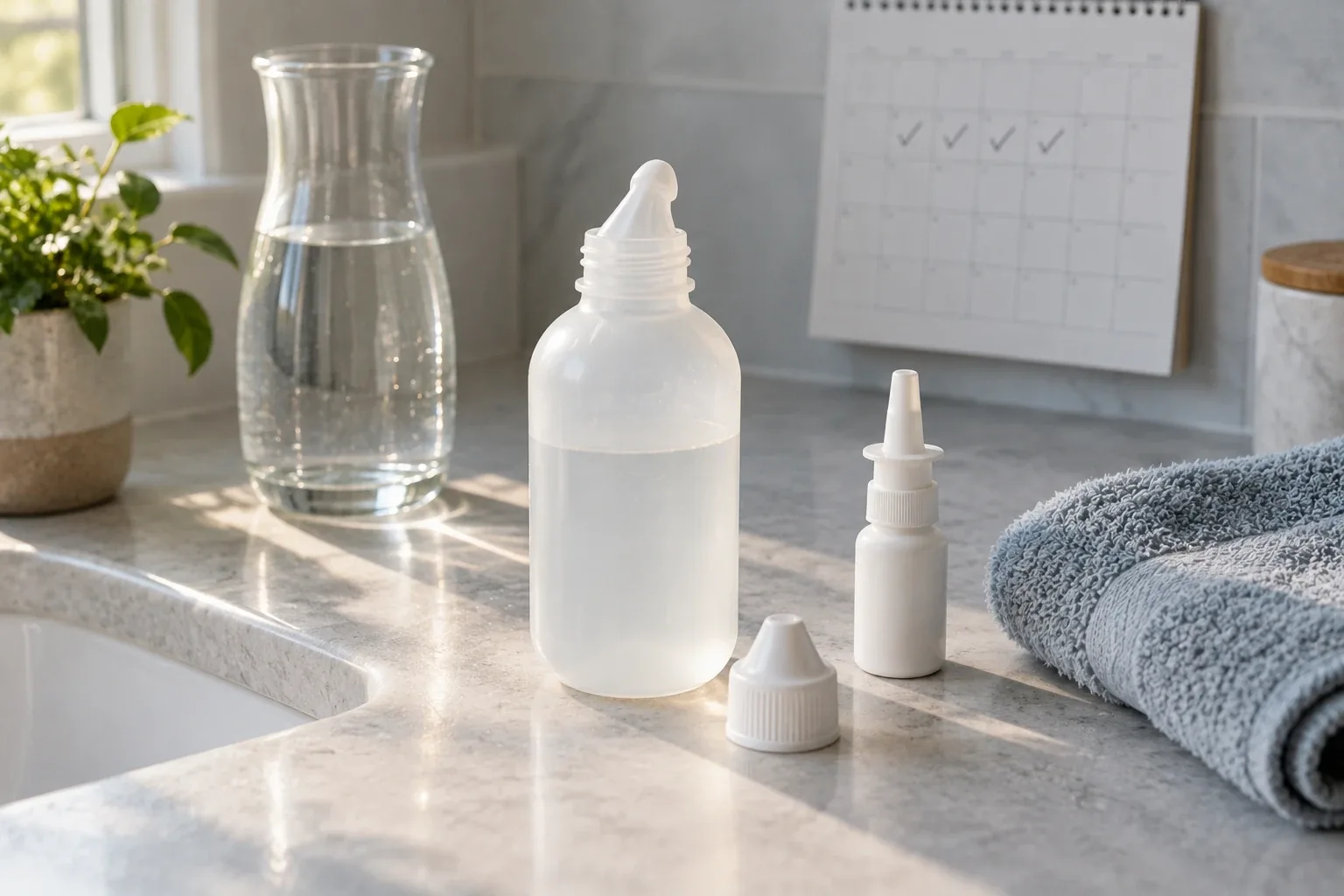
- Saline rinses. Rinsing clears mucus and crusts and helps medicine reach the sinus lining. Use distilled, sterile, or boiled and cooled water. See how to do a nasal saline rinse.
- A steroid spray or steroid rinse. Your surgeon will tell you whether and when to start a steroid nasal spray or a steroid rinse (for example, budesonide added to the rinse bottle). Used every day for the long term, topical steroids lower the chance of polyps returning (Fandíño et al., 2013).
- Steroid pills when needed. A course of steroid pills is a routine part of care for many polyp patients after surgery and during flare-ups. Because repeated courses carry risks, your doctor uses them thoughtfully (Hellings et al., 2024).
- Regular checkups. Polyps can start to regrow before you notice symptoms, so routine visits let us catch and treat regrowth early.
- Treating asthma and allergies. Keeping related conditions under control helps keep polyps away (Shin et al., 2025).
What if my nasal polyps come back?
If symptoms return or polyps regrow despite good daily care, there are effective next steps, and the choice depends on you (Hellings et al., 2024):
- Biologic medicines. Injectable medicines that target the inflammation behind polyps. They can shrink polyps, improve the sense of smell, and reduce the need for more surgery and steroid pills (Kratchmarov et al., 2025). We prescribe and manage all four biologics approved for nasal polyps: Dupixent (dupilumab), Xolair (omalizumab), Nucala (mepolizumab) and Tezspire (tezepelumab). See biologics for nasal polyps.
- Revision surgery. When regrowth blocks the sinuses and does not respond to medicine, a second operation can help. Surgery and biologics are not either-or; some patients do best with both (Kim et al., 2023).
Schedule a Sinus Evaluation
Polyps coming back is common and treatable. If your nose is blocking up again, your sense of smell is fading, or you had polyp surgery and have not had a checkup in a while, our board-certified ENTs can look, explain what they see, and talk through your options.
Sources
- Hopkins C. Chronic rhinosinusitis with nasal polyps. New England Journal of Medicine. 2019;381(1):55-63. doi:10.1056/NEJMcp1800215. PMID: 31269366
- Kratchmarov R, Dharia T, Buchheit K. Clinical efficacy and mechanisms of biologics for chronic rhinosinusitis with nasal polyps. Journal of Allergy and Clinical Immunology. 2025;155(5):1401-1410. doi:10.1016/j.jaci.2025.03.011. PMID: 40132672
- Bai J, Huang JH, Price CPE, et al. Prognostic factors for polyp recurrence in chronic rhinosinusitis with nasal polyps. Journal of Allergy and Clinical Immunology. 2022;150(2):352-361.e7. doi:10.1016/j.jaci.2022.02.029. PMID: 35305978
- Hellings PW, Alobid I, Anselmo-Lima WT, et al. EUFOREA/EPOS2020 statement on the clinical considerations for chronic rhinosinusitis with nasal polyps care. Allergy. 2024;79(5):1123-1133. doi:10.1111/all.15982. PMID: 38108602
- Shin JJ, Wilson M, McKenna M, et al. Clinical practice guideline: surgical management of chronic rhinosinusitis. Otolaryngology–Head and Neck Surgery. 2025;172(Suppl 2):S1-S47. doi:10.1002/ohn.1287. PMID: 40424072
- Kim SL, Rank MA, Peters AT. The chronic rhinosinusitis practice parameter. Annals of Allergy, Asthma & Immunology. 2023;131(3):307-310. doi:10.1016/j.anai.2022.12.022. PMID: 37667905
- Fandíño M, Macdonald KI, Lee J, Witterick IJ. The use of postoperative topical corticosteroids in chronic rhinosinusitis with nasal polyps: a systematic review and meta-analysis. American Journal of Rhinology & Allergy. 2013;27(5):e146-e157. doi:10.2500/ajra.2013.27.3950. PMID: 24119596
This article is for educational purposes only and does not replace an in-person evaluation.