Article
Ruptured Eardrum: Symptoms, Healing Time and When to Get Help
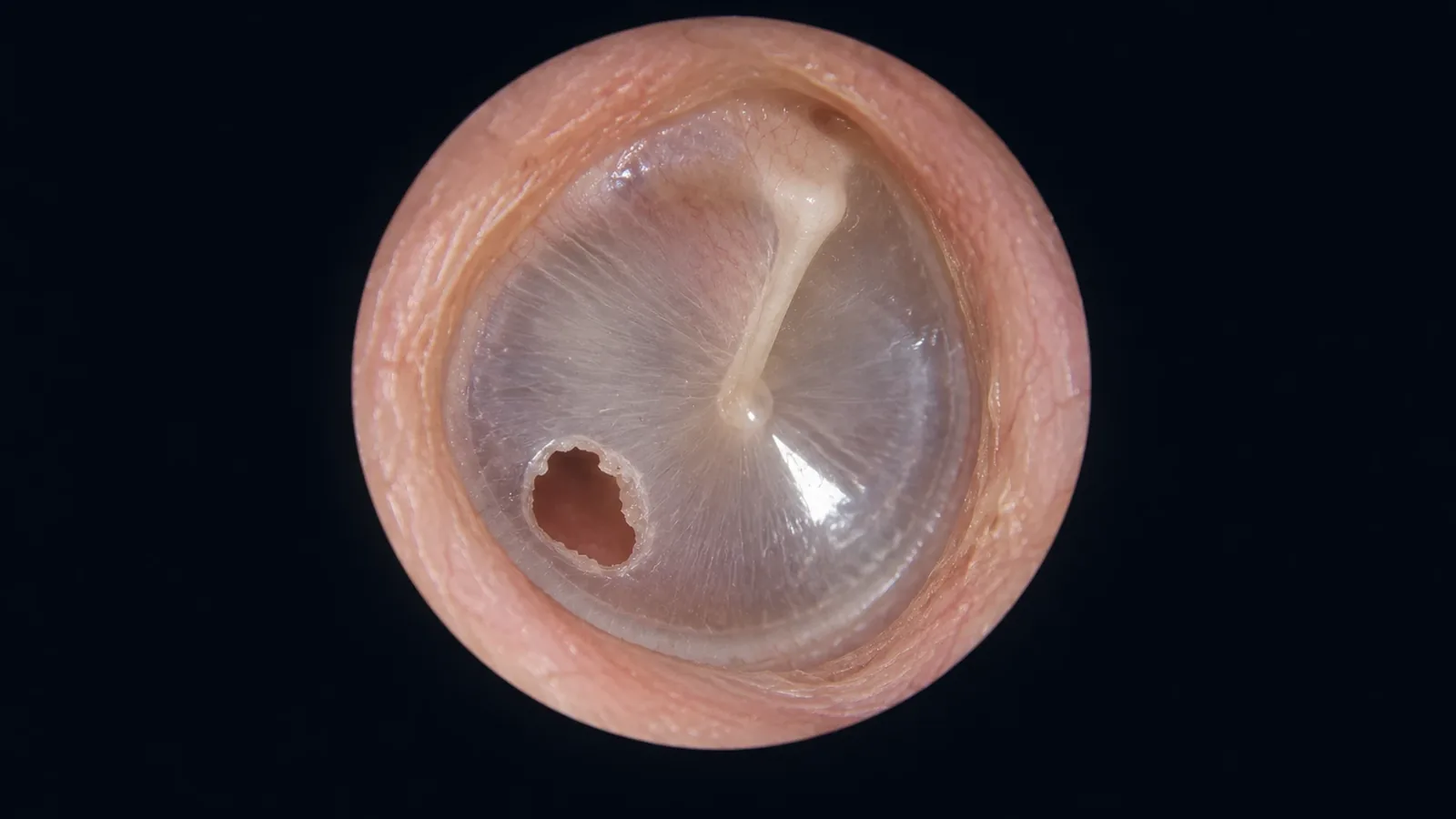
Quick answer: A ruptured (perforated) eardrum usually causes sudden ear pain, muffled hearing and sometimes bloody drainage. Most small tears heal on their own within about a month if you keep the ear dry and put nothing in it. Use only ear drops a doctor has confirmed are safe for an open eardrum. Get same-day care for spinning dizziness, facial weakness or a large drop in hearing, and see an ENT for any hole that has not closed by 3 months.
Your eardrum (tympanic membrane) is a thin layer of tissue between the ear canal and the middle ear. It vibrates with sound and keeps water and germs out of the middle ear. A ruptured eardrum, also called a tympanic membrane perforation, is a hole or tear in that tissue. It can be alarming, especially when there is blood, but most perforations heal without surgery. What matters is protecting the ear while it heals and knowing which symptoms mean you should be seen.
What Causes a Ruptured Eardrum?
Most perforations come from a middle ear infection or an injury:
- Middle ear infection (otitis media): pressure from infected fluid behind the eardrum can make it burst, which is why an ear infection sometimes starts to drain. This is common in children.
- Something pushed into the ear canal: cotton swabs are one of the most common causes of injury, along with other objects put in the ear.
- A slap, blast or blow to the ear: a sudden burst of air pressure can tear the eardrum.
- Pressure changes: flying or scuba diving when the ear cannot equalize (barotrauma). Our guide to airplane ear covers how to prevent it.
Children are especially at risk. In a national study of emergency department visits, nearly two-thirds of people treated for a traumatic eardrum perforation were 18 or younger, and children under 6 were the most affected group. If you clean your ears with cotton swabs, our article on removing ear wax safely explains safer options.
What Are the Symptoms of a Ruptured Eardrum?
Symptoms usually start suddenly, at the moment of the injury or as an ear infection peaks:
- Sharp ear pain
- Muffled or reduced hearing in that ear
- Drainage from the ear, which may be bloody, clear or pus-like
- Ringing or buzzing in the ear (tinnitus)
- Less often, dizziness
A small hole can cause only mild symptoms. The only way to confirm a perforation is an ear exam.
How Long Does a Ruptured Eardrum Take to Heal?
The eardrum is good at repairing itself, and size matters most. A study summarized in the Canadian Medical Association Journal followed 126 patients with injury-related perforations: 72% of holes smaller than a quarter of the eardrum closed on their own within a month, while only 25% of larger holes had closed by that point. Larger holes can keep closing after that, which is why a perforation is usually watched for up to 3 months before repair is considered.
A hole caused by an ear infection often closes once the infection clears. A hole that keeps draining or never closes can be a sign of a long-standing (chronic) middle ear infection, which needs an ENT’s care.
Once the eardrum closes, hearing usually returns to normal. If it does not, a hearing test can check for injury to the tiny hearing bones or the inner ear.
How Should You Care for Your Ear While It Heals?
- Keep it dry. Water can carry germs into the middle ear. Place a cotton ball coated with petroleum jelly in the ear when you shower or wash your hair, and do not swim until a doctor confirms the eardrum has closed.
- Put nothing in the ear. No cotton swabs, fingers or home remedies.
- Use only drops cleared for an open eardrum. The American Academy of Otolaryngology–Head and Neck Surgery clinical practice guideline on ear canal infections directs clinicians to use drops that will not harm the inner ear when the eardrum may have a hole, and to avoid drops that contain alcohol or are strongly acidic, because they can cause pain and may damage hearing. Many over-the-counter drying drops for swimmer’s ear contain alcohol, so do not use them. If the ear is draining or infected, a doctor can prescribe antibiotic drops that are safe with a perforation, such as ofloxacin.
- Ask before you fly. Air can pass through the hole, so flying is often less painful than with a blocked ear, but a recent injury, dizziness or drainage should be checked before you travel. Avoid scuba diving until the eardrum has healed.
When Should You See an ENT for a Ruptured Eardrum?
It is worth having any suspected perforation examined, so a doctor can confirm it, check for infection and plan a recheck. Some symptoms need faster care.
Get same-day care through our ENT Urgent Care if you have:
- Spinning dizziness (vertigo), nausea or trouble with balance
- Weakness on one side of the face after an ear injury
- A large drop in hearing
- An object stuck in the ear
Call 911 or go to the ER for constant, severe dizziness or stroke-like signs, such as a drooping face with arm weakness or trouble speaking.
Schedule a visit if:
- Drainage continues after 2 weeks of antibiotic drops
- The hole has not closed by 3 months
- Your hearing has not come back once the ear has healed
- You or your child keep getting ear infections that drain
How Is a Ruptured Eardrum Repaired?
Repair is for holes that do not close on their own. Our board-certified ENTs perform two main procedures as part of our ear care:
- Myringoplasty patches the eardrum without opening the middle ear and suits many smaller holes.
- Tympanoplasty lifts part of the eardrum to place a graft and lets the surgeon check the middle ear. It is used for larger holes, or when infection or the hearing bones also need attention.
Both procedures close the hole with a graft, usually the patient’s own tissue, and most patients go home the same day. In a 2023 review of 85 studies, repair closed the eardrum in about 90% of holes smaller than half the eardrum and in about 83% to 85% of larger holes, with similar results for both procedures. Children sometimes have a small hole left behind after an ear tube comes out, and it is evaluated the same way.
Recovery mainly means keeping the ear dry for several weeks. Our tympanoplasty after-care instructions explain what to expect.
Sources
- Harvie M, Roy CF, Gurberg J. Traumatic tympanic membrane perforations. CMAJ. 2024;196(3):E100. doi:10.1503/cmaj.230868. PMCID: PMC10833100
- Carniol ET, Bresler A, Shaigany K, et al. Traumatic tympanic membrane perforations diagnosed in emergency departments. JAMA Otolaryngology–Head & Neck Surgery. 2018;144(2):136-139. doi:10.1001/jamaoto.2017.2550. PMID: 29270620
- Rosenfeld RM, Schwartz SR, Cannon CR, et al. Clinical practice guideline: acute otitis externa. Otolaryngology–Head and Neck Surgery. 2014;150(1 Suppl):S1-S24. doi:10.1177/0194599813517083. PMID: 24491310
- Jungbauer WN Jr, Jeong S, Nguyen SA, Lambert PR. Comparing myringoplasty to type I tympanoplasty in tympanic membrane repair: a systematic review and meta-analysis. Otolaryngology–Head and Neck Surgery. 2023;168(5):922-934. doi:10.1002/ohn.191. PMID: 36939595
This article is for educational purposes only and does not replace an in-person evaluation.