Article
Snoring Versus Sleep Apnea: How to Tell the Difference
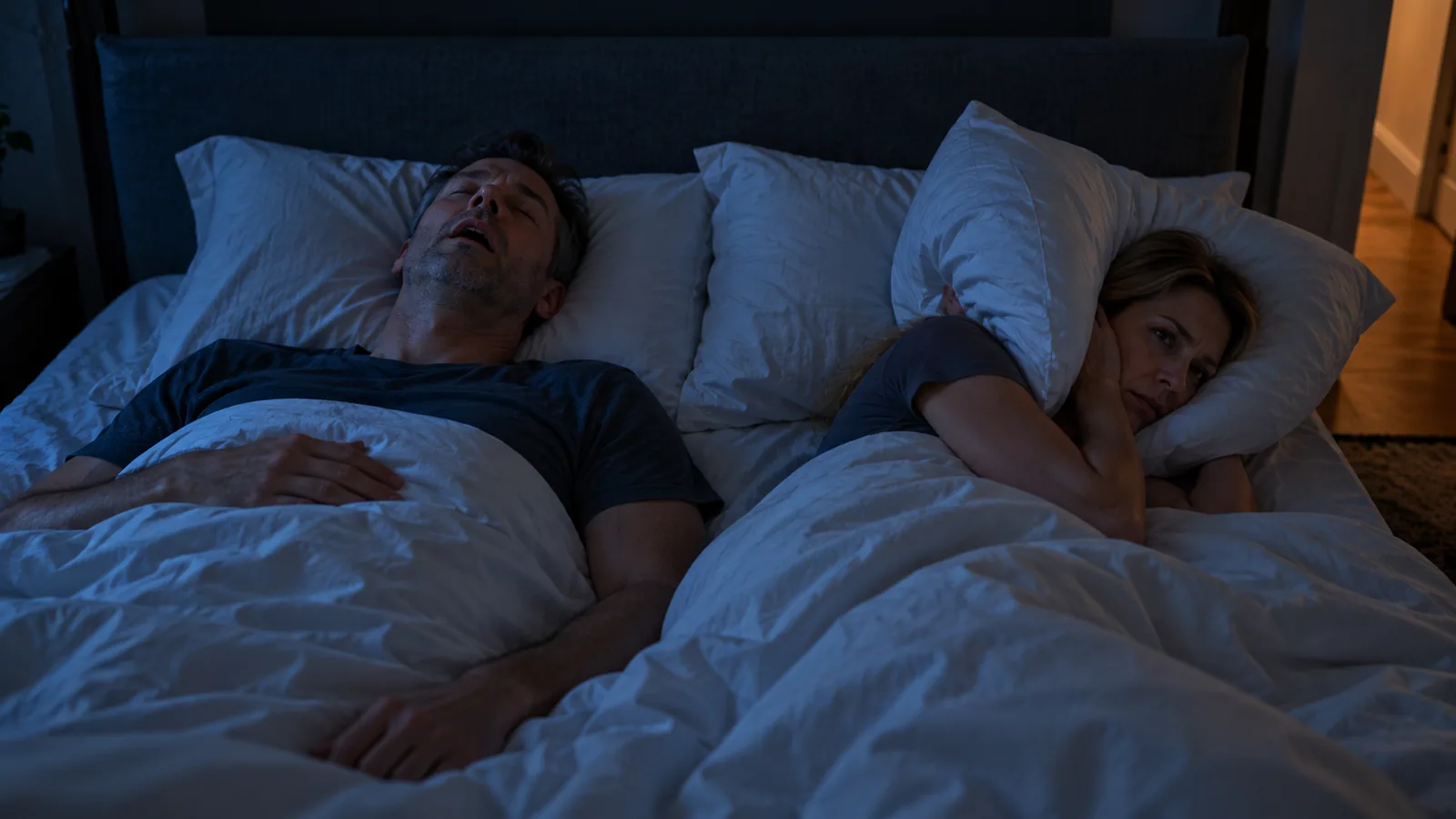
Quick answer: Snoring is caused by vibration of relaxed throat tissues and is often harmless. Sleep apnea involves repeated breathing pauses during sleep, which can lead to daytime fatigue and other health concerns. Key signs that snoring may be sleep apnea include witnessed breathing pauses, gasping, and excessive daytime sleepiness. A sleep study is needed to confirm the diagnosis.
Snoring is extremely common. Many people snore occasionally, and for some, it happens nearly every night. While snoring can be a nuisance to bed partners, it does not always indicate a health problem. However, snoring can also be a symptom of obstructive sleep apnea (OSA), a condition where breathing repeatedly stops and starts during sleep. Understanding the difference matters because sleep apnea, if left unaddressed, may contribute to daytime fatigue, cardiovascular strain, and other health concerns.
At Capital ENT, our board-certified ENT specialists frequently help patients figure out whether their snoring is simple or something that warrants further evaluation. This post explains what distinguishes routine snoring from sleep apnea and outlines the signs that suggest it may be time to see a specialist.
What Causes Snoring?
Snoring occurs when airflow through the mouth and nose is partially blocked during sleep. As air moves past relaxed tissues in the throat, it causes vibration, which produces the familiar snoring sound. Several factors can contribute to snoring, including nasal congestion, the anatomy of the mouth and throat, sleeping position, alcohol use, and excess weight.
In many cases, snoring is what physicians call "primary snoring" or "simple snoring." This type of snoring is not associated with breathing interruptions or significant drops in blood oxygen levels. While it can be loud and disruptive, simple snoring on its own may not pose serious health risks. However, the sound of snoring alone does not reveal whether breathing is being interrupted, which is why evaluation can be helpful when snoring is frequent or severe.
What Is Obstructive Sleep Apnea?
Obstructive sleep apnea is a sleep-related breathing disorder in which the upper airway becomes partially or completely blocked during sleep. These blockages cause pauses in breathing, often lasting 10 seconds or longer, followed by brief awakenings as the body works to restore airflow. People with OSA may experience dozens or even hundreds of these events per night without being fully aware of them.
According to the American Academy of Otolaryngology-Head and Neck Surgery (AAO-HNS), obstructive sleep apnea can lead to fragmented sleep, reduced oxygen delivery, and increased stress on the cardiovascular system over time. The condition is associated with daytime sleepiness, difficulty concentrating, and elevated risks for high blood pressure and heart disease.
Key Differences Between Snoring and Sleep Apnea
While snoring is often present in sleep apnea, not everyone who snores has the condition. Here are some differences that may help distinguish simple snoring from OSA:
- Breathing pauses: Bed partners often notice that someone with sleep apnea stops breathing, gasps, or chokes during sleep. Simple snoring typically does not involve these pauses.
- Daytime symptoms: People with sleep apnea often wake feeling unrefreshed, even after a full night of sleep. Excessive daytime sleepiness, morning headaches, and difficulty concentrating are common. Simple snoring is less likely to cause these symptoms.
- Sleep quality: Those with OSA may wake frequently during the night, sometimes with a sensation of choking or shortness of breath. Simple snorers usually sleep through the night without these disruptions.
- Snoring pattern: Snoring associated with sleep apnea is often loud and may have an irregular pattern, with periods of silence followed by gasping. Simple snoring tends to be more consistent.
It is important to note that symptoms can overlap, and the only way to confirm whether sleep apnea is present is through a formal sleep evaluation.
How Is Sleep Apnea Diagnosed?
Diagnosing obstructive sleep apnea requires a sleep study. This can be an overnight study in a sleep lab (polysomnography) or a home sleep test, and both monitor breathing, oxygen levels, and other measures during sleep. The American Academy of Sleep Medicine's diagnostic testing guideline supports a home sleep test for many adults whose symptoms suggest moderate to severe sleep apnea, which makes an at-home sleep study a convenient option. A board-certified sleep medicine physician reads your study. If results suggest sleep apnea, our ENT specialists can discuss the findings and recommend next steps.
During an office visit, our physicians will also examine the nose, throat, and airway to identify any structural factors that may be contributing to snoring or airway obstruction. Conditions such as a deviated septum, enlarged tonsils, or nasal valve collapse can play a role in both snoring and sleep apnea.
When Should You See a Specialist?
Consider scheduling an evaluation with an ENT specialist if you or your bed partner notice any of the following:
- Loud, frequent snoring that disrupts sleep
- Witnessed pauses in breathing, gasping, or choking during sleep
- Waking up with a dry mouth, sore throat, or headache
- Excessive daytime sleepiness or fatigue despite adequate sleep time
- Difficulty concentrating or irritability
An evaluation can help determine whether your snoring is simple or related to sleep apnea. If sleep apnea is diagnosed, CPAP therapy is usually the first treatment offered, especially for moderate to severe sleep apnea (Gottlieb and Punjabi, JAMA, 2020). Other options are generally considered for people who cannot use CPAP or who have milder sleep apnea:
- Oral appliances: custom mouthpieces that hold the lower jaw forward during sleep, made by a dental sleep specialist. Over time they can change how the teeth fit together or cause jaw discomfort, so they need regular dental follow-up. Learn more in Are Oral Appliances Effective for Sleep Apnea?
- Inspire therapy: an implanted device that stimulates the nerve controlling the tongue (hypoglossal nerve stimulation) to keep the airway open during sleep. It is not a surgery that removes tissue. It is for adults with moderate to severe sleep apnea who cannot use CPAP and who meet specific criteria, which include a sleep endoscopy done in our office.
- Airway surgery: procedures on the nose or throat when a specific blockage is contributing.
- Weight loss and sleep position: helpful for many people alongside other treatment. Losing excess weight can reduce sleep apnea severity (see GLP-1 medications and sleep apnea), and some people have breathing pauses mainly when sleeping on their back.
The right choice depends on the underlying cause and severity. Our CPAP alternatives page covers the options in more detail.
At Capital ENT, our board-certified ENT specialists have experience evaluating and treating snoring and sleep apnea. We can help identify contributing factors, coordinate sleep testing, and discuss treatment options suited to your situation.
Sources
- American Academy of Otolaryngology-Head and Neck Surgery. Snoring, Sleeping Disorders, and Sleep Apnea. ENTHealth.org.
- Gottlieb DJ, Punjabi NM. Diagnosis and Management of Obstructive Sleep Apnea: A Review. JAMA. 2020;323(14):1389-1400. doi:10.1001/jama.2020.3514
- Kapur VK, Auckley DH, Chowdhuri S, et al. Clinical Practice Guideline for Diagnostic Testing for Adult Obstructive Sleep Apnea: An American Academy of Sleep Medicine Clinical Practice Guideline. J Clin Sleep Med. 2017;13(3):479-504. doi:10.5664/jcsm.6506
This article is for educational purposes only and does not replace an in-person evaluation.