Article
Sleep Apnea in Women: Why It Often Goes Undiagnosed
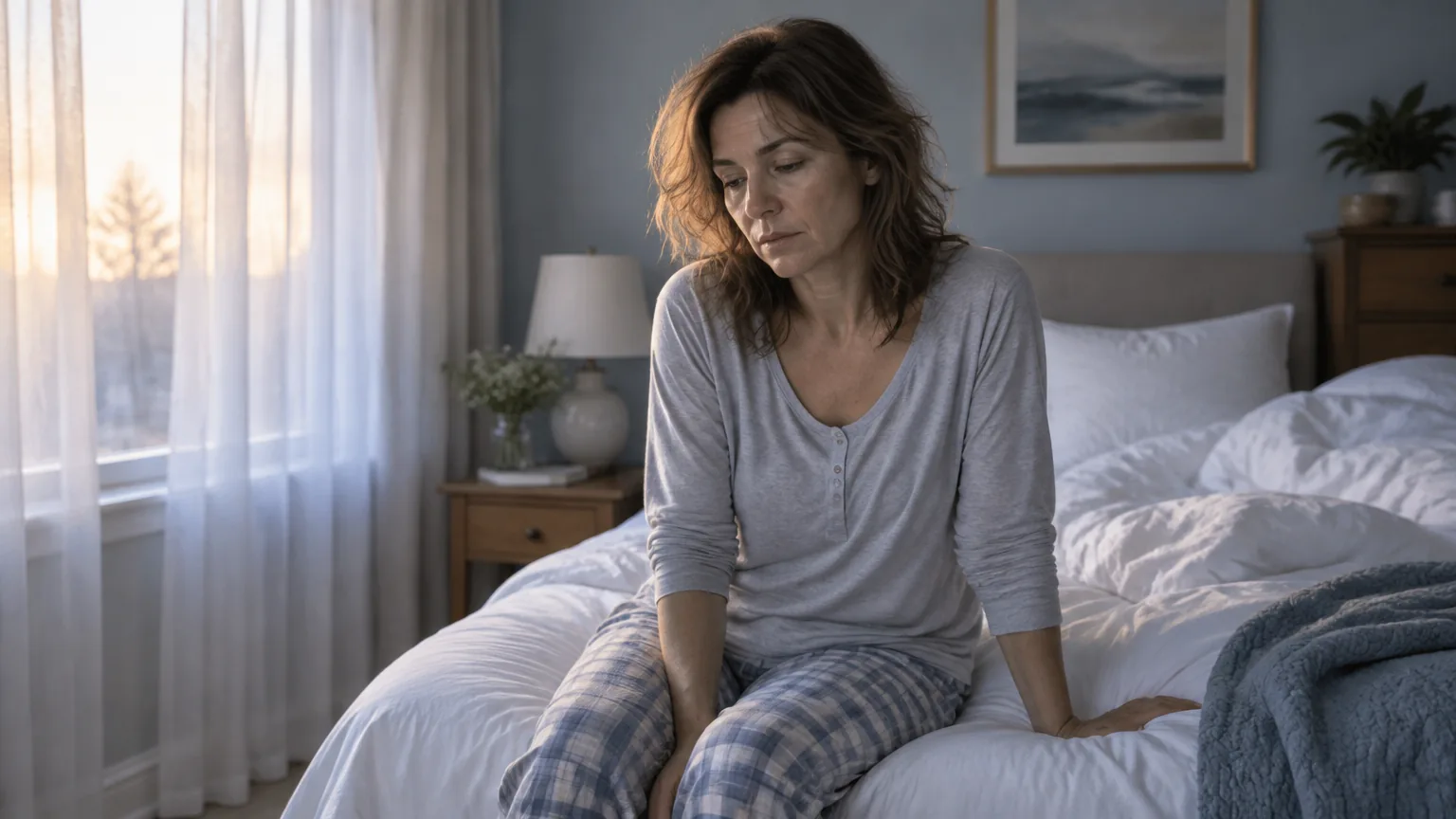
Quick answer: Sleep apnea in women is often missed because women more often have tiredness, trouble sleeping, morning headaches and low mood than the loud snoring and breathing pauses people expect, and common screening questionnaires were built around men's symptoms. Risk rises after menopause. If these symptoms sound familiar, a low questionnaire score or a normal home test does not always rule it out, so ask about a sleep study.
Many women with sleep apnea are first treated for insomnia, low mood or tiredness before anyone suggests a sleep study. Sleep apnea is common in women, but it often looks different than it does in men, and the usual checklists were built around men. Here is why it gets missed and when testing makes sense.
How Common Is Sleep Apnea in Women?
Obstructive sleep apnea happens when the throat narrows or closes again and again during sleep. Each time, airflow drops and the brain wakes briefly, usually without you noticing. A 2026 review estimates it affects up to 23% of women and 49% of men. It is underdiagnosed in both, and the way it shows up in women makes it easier to miss.
What Symptoms Do Women With Sleep Apnea Have?
Loud snoring and pauses in breathing that a partner notices are the signs most people know. Men report these more often. Women more often report:
- Trouble falling asleep or staying asleep
- Waking up unrefreshed, even after enough hours in bed
- Tiredness or low energy during the day
- Morning headaches
- Low mood, anxiety, or trouble with memory and concentration
- Waking at night to urinate, or night sweats
In a study of more than 1,000 patients who had overnight sleep studies, these differences held even after accounting for age, weight and how severe the sleep apnea was. In a registry of 7,130 patients, women with sleep apnea had more symptoms and more related health problems than men, even though their sleep apnea looked milder on the sleep study. Another study found that, at the same severity, women had more symptoms than men.
Why Is Sleep Apnea Missed in Women?
Several things work together:
- The symptoms look like something else. Insomnia, depression, anxiety, thyroid problems and menopause can all cause poor sleep and tiredness. These conditions can also occur alongside sleep apnea, so treating one does not rule out the other.
- Screening questionnaires were built around men. Common questionnaires, such as STOP-Bang, give points for loud snoring, pauses someone saw, a large neck and being male. These tools are less sensitive in women, so a low score does not rule out sleep apnea.
- Snoring goes unreported. Women are less likely to report snoring, whether because they sleep alone, no one has mentioned it, or it seems unimportant.
- The sleep study can look milder. Women more often have partial narrowing of the airway rather than full pauses, often clustered in dream (REM) sleep, and a lower overall score, even when they feel quite unwell. A result in the mild range does not mean the effect on your sleep is mild.
Does Menopause Raise the Risk of Sleep Apnea?
Yes. Estrogen and progesterone help keep breathing steady during sleep. Risk rises after menopause, beyond what aging alone explains, and women who reach menopause early, including after surgery to remove both ovaries, appear to be at higher risk.
If your sleep changed around menopause, it is reasonable to ask whether sleep apnea is part of the picture, not only hot flashes or stress.
Why Does Untreated Sleep Apnea Matter?
Sleep apnea has been linked with high blood pressure, atrial fibrillation, heart failure, coronary artery disease and stroke. Poor sleep night after night also affects energy, mood, work and driving. Finding it matters because it is treatable.
Should I Get a Sleep Study?
Consider asking about a sleep study if several of these apply to you, even if a questionnaire said you are low risk:
- Tiredness or unrefreshing sleep that has not improved after other causes were treated
- Sleep problems that started or got worse around menopause
- Morning headaches
- Snoring of any loudness, or pauses in breathing someone has noticed
- High blood pressure
- Depression or anxiety along with poor sleep
Mention snoring even if it seems minor, and ask a bed partner what they notice.
Most adults start with an at-home sleep study. You can pick one up at any of our four offices or have one mailed to you, and you wear it for one night in your own bed. A board-certified sleep medicine physician reads your study. Results usually take one to two weeks. See how to do a home sleep test for what the night involves.
What If My Home Sleep Test Is Normal?
A home test is a good first step, but it can miss sleep apnea, especially when the breathing problems are partial rather than full pauses. The American Academy of Sleep Medicine guideline recommends an in-lab sleep study when a home test is negative, unclear or did not record well and sleep apnea is still suspected. If your home test was normal and you still feel unwell, tell us. That is a reason to look further, and next steps may include an in-lab study.
How Is Sleep Apnea Treated?
Treatment depends on how severe the sleep apnea is, what is narrowing your airway and what you prefer. CPAP, which keeps the airway open with gentle air pressure through a mask, is the most common treatment. Other options include an oral appliance made by a dental sleep specialist we refer you to, weight loss when it applies, treating a blocked nose, and Inspire for some people who cannot use CPAP.
If you also have insomnia, it can be treated at the same time. See managing insomnia with sleep apnea.
Sources
- Dunietz GL, Chervin RD, Tauman R, Shaklai S, Sankari A. OSA in Women: Associations With Reproductive Aging and Screening Challenges. Chest. 2026;169(3):803-812. PubMed
- Karkala A, Kalkanis A, Tzinas A, et al. Sex inequities in sleep disordered breathing. Sleep Medicine. 2026;145:109002. PubMed
- Pihtili A, Kiyan E, Balcan B, et al. Sex differences in clinical and polysomnographic features of obstructive sleep apnea: The Turkish sleep apnea database (TURKAPNE) cohort. Sleep Medicine. 2025;126:228-234. PubMed
- Trotta L, Antonaglia C, Fabozzi A, et al. Women and obstructive sleep apnea syndrome: Can we finally ask the right questions? The OSAF study. Sleep Medicine. 2026;144:108932. PubMed
- Nigro CA, Dibur E, Borsini E, et al. The influence of gender on symptoms associated with obstructive sleep apnea. Sleep and Breathing. 2018;22(3):683-693. PubMed
- Javaheri S, Javaheri S, Somers VK, et al. Interactions of Obstructive Sleep Apnea With the Pathophysiology of Cardiovascular Disease, Part 1: JACC State-of-the-Art Review. Journal of the American College of Cardiology. 2024;84(13):1208-1223. PubMed
- Kapur VK, Auckley DH, Chowdhuri S, et al. Clinical Practice Guideline for Diagnostic Testing for Adult Obstructive Sleep Apnea: An American Academy of Sleep Medicine Clinical Practice Guideline. Journal of Clinical Sleep Medicine. 2017;13(3):479-504. PubMed
This article is for educational purposes only and does not replace an in-person evaluation.