Article
What Does a Uvula Do? Understanding This Small but Important Structure
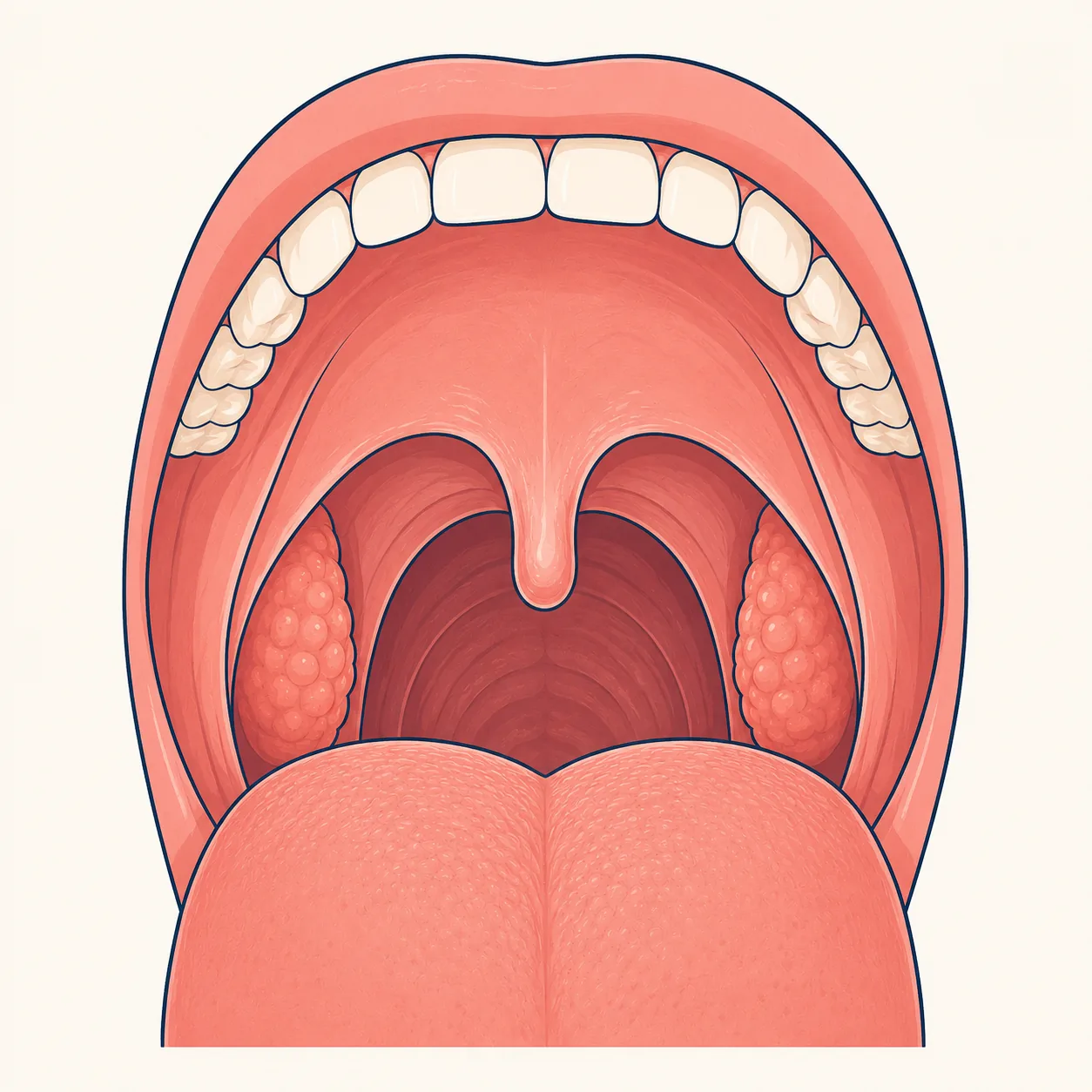
Quick answer: The uvula is the small cone-shaped piece of tissue hanging from the back of the soft palate. It does four main jobs: it helps form certain speech sounds, it works with the soft palate to close off the nasal passages when you swallow so food does not go up your nose, its glands keep the throat moist, and it contributes to the gag reflex that protects the airway. If yours looks long or rests against your tongue, that is usually a harmless variation, though it can cause gagging, throat irritation, and snoring. When the uvula is inflamed, elongated, or adding to snoring, an ENT can assess whether snoreplasty or uvulectomy would help, after ruling out sleep apnea first. Most patients notice no meaningful long-term change in speech or swallowing after partial uvula procedures.
If you've ever looked in the mirror with your mouth wide open, you've probably noticed the small, fleshy piece of tissue hanging down at the back of your throat. That's your uvula, and while it may seem like a minor part of your anatomy, it actually serves several important functions.
At Capital ENT & Sinus Center, our patients often ask about the uvula when they're experiencing throat discomfort, snoring issues, or changes in their speech. Understanding what this structure does can help you recognize when something might not be quite right.
What Is the Uvula?
The uvula is a small, cone-shaped piece of soft tissue that hangs from the middle of the soft palate at the back of your mouth. Its name comes from the Latin word for "little grape," which describes its shape quite well. The uvula is made up of muscle tissue, connective tissue, and mucous membrane, and it contains a significant number of saliva-producing glands.
Some people have a longer uvula than others. Some are born with a bifid, or split, uvula. Most of these variations are completely normal and cause no problems at all.
The Functions of Your Uvula
For many years, scientists weren't entirely sure why humans have a uvula. Research, including a literature review of the question, has helped clarify several roles this small structure may play in everyday functions:
Helping with Speech
The uvula works together with the soft palate and throat muscles to help produce certain sounds. When you speak, your uvula can vibrate and help create specific consonant sounds that are common in many languages. In some languages, uvular sounds are essential for proper pronunciation.
Assisting with Swallowing
When you swallow food or liquid, your soft palate and uvula work together to close off the nasal passages. This helps prevent food and drinks from going up into your nose (something you've likely experienced briefly when laughing while eating or drinking).
Keeping the Throat Moist
The uvula contains many saliva-producing glands that help keep the back of your throat lubricated. This moisture is important for comfortable swallowing and may help protect against infection.
Triggering the Gag Reflex
The uvula can play a role in triggering your gag reflex, which helps protect your airway from foreign objects. This is one reason why touching the uvula often causes a gagging sensation.
Common Uvula Problems
While the uvula typically functions without issue, several conditions can affect it:
Swollen Uvula (Uvulitis)
The uvula can become swollen and inflamed due to infections, allergies, dehydration, acid reflux, or irritation from snoring. A swollen uvula may cause a sensation of something being stuck in your throat, difficulty swallowing, or changes in your voice.
Elongated Uvula
Some people have a uvula that is simply longer than average. Most of the time that is a harmless variation, in the same way some people have longer fingers. It becomes worth attention when it starts causing symptoms.
When a long uvula touches the tongue. This is one of the most common things patients describe, and it is usually noticed in a mirror or felt as a tickle at the back of the mouth. A uvula resting against the tongue or the back of the throat can trigger:
- A persistent feeling that something is stuck in your throat
- Gagging, particularly when brushing your teeth or lying on your back
- A dry, scratchy throat, especially on waking
- Frequent throat clearing
- Snoring, or snoring that has grown louder
Why it happens. Sometimes the uvula is long by nature and always has been. Other times it becomes longer or thicker over time, because tissue that vibrates every night against itself is thought to swell and stretch. That is why heavy snorers often notice their uvula changing over the years. Chronic dehydration, acid reflux, smoking, and repeated inflammation all pull in the same direction. An elongated uvula can therefore be a consequence of snoring as much as a cause of it.
The step that matters before treating it. If your long uvula comes with snoring, get evaluated for obstructive sleep apnea, following the AASM diagnostic guideline, before considering any procedure. Trimming or stiffening the uvula can quiet the noise while leaving the underlying airway obstruction in place, and a patient who stops snoring but still stops breathing has lost their most obvious warning sign. An at-home sleep study settles the question and changes what treatment makes sense.
Uvula and Snoring
The uvula can vibrate during sleep, contributing to snoring sounds. When the uvula is particularly long or relaxed, it may worsen snoring or contribute to obstructive sleep apnea in some individuals. For patients with snoring concerns, our specialists may recommend an at-home sleep study to better understand what's happening during sleep.
When Should You See a Specialist?
While minor uvula irritation often resolves on its own, certain symptoms warrant evaluation by an ENT specialist. Consider scheduling an appointment if you experience:
- Severe or persistent swelling of the uvula
- Difficulty breathing or swallowing
- Chronic snoring that disrupts your sleep or your partner's sleep
- A feeling that something is constantly stuck in your throat
- Changes in your voice that don't improve
- Signs of infection, such as fever, white patches, or severe pain
Our board-certified ENTs can examine your uvula and throat to determine if there's an underlying issue that needs attention. In some cases, imaging or a sleep study may be recommended to get a complete picture.
Treatment Options for Uvula-Related Issues
Treatment depends entirely on what's causing the problem. Mild uvulitis from a viral infection may simply require rest, hydration, and over-the-counter remedies. Bacterial infections may need antibiotic treatment.
For patients whose uvula contributes to chronic snoring or sleep apnea, several options may be considered. Less invasive approaches like snoreplasty can help stiffen tissues to reduce vibration. In cases where the uvula is significantly contributing to airway obstruction, uvulectomy (partial or complete removal of the uvula) may be discussed as part of a comprehensive treatment plan.
It's worth noting that removing or modifying the uvula doesn't typically affect speech or swallowing in most patients, though our specialists always discuss potential risks and benefits before any procedure.
The Bottom Line
Your uvula may be small, but it plays a helpful role in speech, swallowing, and keeping your throat comfortable. Most people never have any issues with their uvula, but when problems do arise, an ENT specialist can help identify the cause and recommend appropriate next steps.
This article is for educational purposes only and does not replace an in-person evaluation.